
Case Study is from the textbook:
Strategic Social Media: From Marketing To Social Change, Malden, MA: Wiley Blackwell, Mahoney, L. M., & Tang, T. (2017), page 191
Orkut Büyükkökten, a Google employee, created Orkut, a social networking site owned/operatied by Google in 2004 and it shut down in 2014.
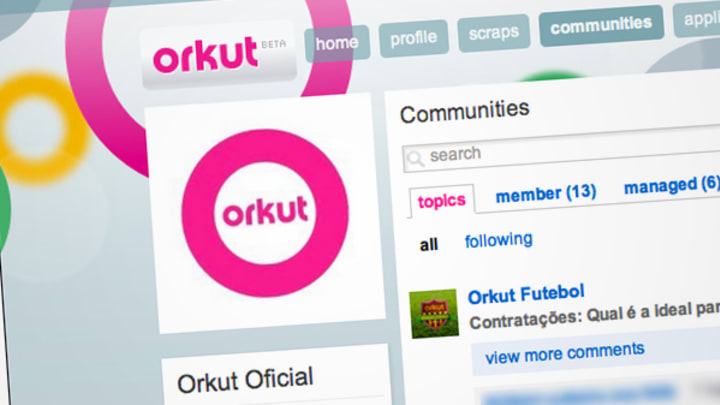
50,000 communities were made in the first four months and rose to 1,500,000 in one year. Although their peak was in 2012 with 30,000,000 users, becoming a market leader, showing that social media could be used for marketing.
What did they do successfully and what was the reason for their downfall? You’re about to find out.
Orkut had a (somewhat) Successful Action Plan
Orkut created a social media strategy to understand what tools they can use, what they’re successfully doing, and how they can make improvements. The plan included seven steps:
- Goals:
- To bring people together, connecting them through an online community. One could connect with people they know or don’t know, yet admire.
- Target Audience:
- Orkut was mainly popular in Brazil, specifically with technology workers and students.
- Social Media Choice:
- Orkut was just like any other social platform, it actually reminds me of Facebook, where you find communities and keep up with the lives of friends/family. One could find classmates through online school communities and friends through residential street groups.
- Resources:
- Owned and Operated by Google, thus they got their resources from Google.
- Policies:
- With Social Media being so new at the time, many people were concerned with privacy. Orkut ensured to have a big focus on privacy policies.
- Monitoring:
- Orkut monitored user’s recommendations on products/services through community memberships, although they did not monitor as much as they should have.
- Activity Plan:
- This step is where they started to plummet

Orkut’s Downfall
Orkut could not completely fulfill steps 6 and 7, which they needed in order to remain successful.
Orkut didn’t have the proper functions to survive and failed to monitor the functions they did have.
Some functions were blocked, they limited the number of friends, and there were issues loading and sharing photos. If they constantly monitored and evaluated their functions they would have been able to quickly fix the problems and make adjustments.
In addition, they lacked an Activity Plan, not knowing where to go next or how to satisfy their audience. Since they could not keep up with their audiences wants/needs, their audience found other platforms to go to that better understood their wants/needs.
Advice
My advice to Orkut and other businesses for their future social media strategy would be to constantly monitor and evaluate your platform and audience.
People were interested in Orkut because of Google’s had a big reputation and the invite-only membership list. Orkut pulled them in successfully, but could not keep them.
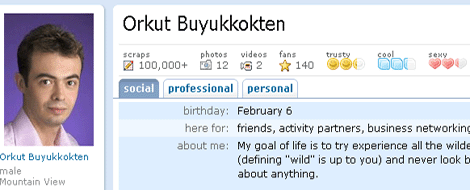
Although Orkut was simple to navigate and join communities and users had fun rating each other on sexiness, coolness, and trustworthiness, it was not enough to keep them around.
Brazil was their main target audience, being the fifth largest online market in the world, they have more cell phones than people, thus highly enjoy digital and social media. Also, outdoor marketing is banned in Brazil, 77% of social media users in Brazil enjoy online shopping, four-fifths use social media when researching products, and they trust online user recommendation more than any other source. This caused a boom in online marketing that Orkut should have gotten on board with. They should have made online shopping and marketing functions because that is what their main target market enjoyed.
Brazilians want to be able to blog, use social gaming for engagement, and use online videos when marketing, but, yet again, Orkut still did not get on board with these desired features. Brazilians respond more to online videos; which Orkut was not capable of doing.
Orkut should have been monitoring and evaluating these desired wants/needs in order to make these improvements. If they did maybe the downfall of Orkut would have never happened, but is definitely something all businesses can learn from.
What is Orkut up to now?

One can say they have somewhat learned from their mistakes and found what they need to do to successfully launch a new platform, called hello.
Similar to Orkut, hello brings people together, this time connecting them based on their interests. The new app is focusing more on what is relevant to the audience, allowing them to personalize the app for their own needs.
We can only hope they have a better activity plan, are constantly monitoring/evaluating the platform, and giving the audience functions they desire.
 Jill's Thoughts