
Viral Marketing is when content is created and directed towards a target audience and it spreads rapidly to increase sales, engagement, awareness, etc.
What Makes a Marketing Initiative go viral?
To go viral, the marketing initiatives need to have certain characteristics, although going viral is not guaranteed.
The Top Five Characteristics Are:
- Interactivity
- Easy-Sharing
- Relevant
- Creative/Unique
- Emotional Appeal
Interactivity
This characteristic gives the audience a personalized experience that encourages interaction through comments.
Spotify

In 2019, Spotify had a Wrapped Campaign where users could go into the app to see their own most listened to songs of the year and decade.
The campaign was interactive because it gave a personalized experience and a discussion was created. You can see my personalized “Wrap Up” in the image below.
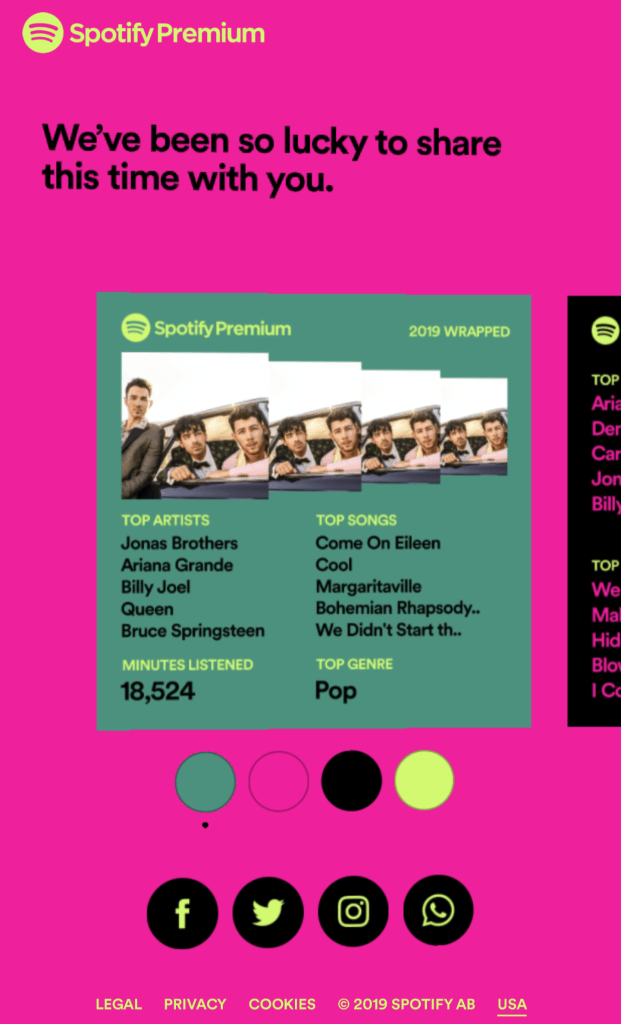
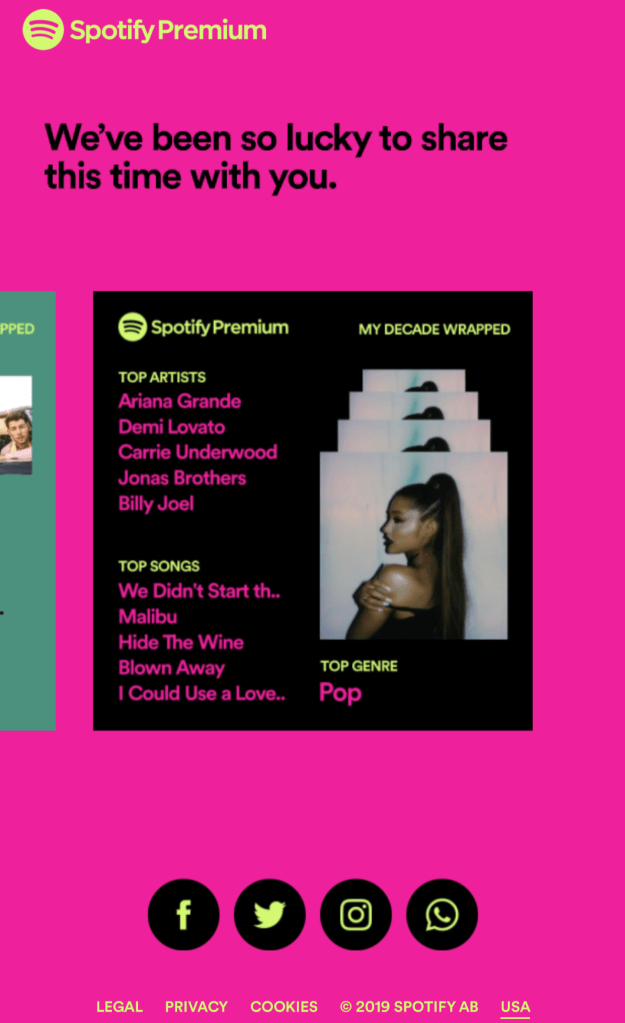
Spotify even let users personalize their “wrap up” even more with color options to choose from before sharing, as shown in the image.
Spotify’s engagement rapidly increased with over 60 million users engaging in the in-app stories, 3 billion Wrapped Up streams, and about 1.2 million Twitter post mentions.
Since they encouraged sharing, it resulting in a lot of discussion between users. This bring us into how easy it was to share my “wrap up” so I could discuss my “wrap up” with my friends.
Easy-Sharing
Shopify
The content should be easy to share by using tools like widgets/sharing buttons.

Spotify encouraged sharing by adding buttons for Facebook, Twitter, Instagram, and WhatsApp.
I personally shared mine on Instagram where I interacted with friends discussing the differences between our “wrap ups” and the minutes we listened on Spotify.
Relevant
The content must revolve around trends and recent news.
Oreo
During the Super Bowl in 2013, the power went out for 34 minutes. People immediately started talking about it on social media and Oreo jumped at the opportunity to take part in the trend.
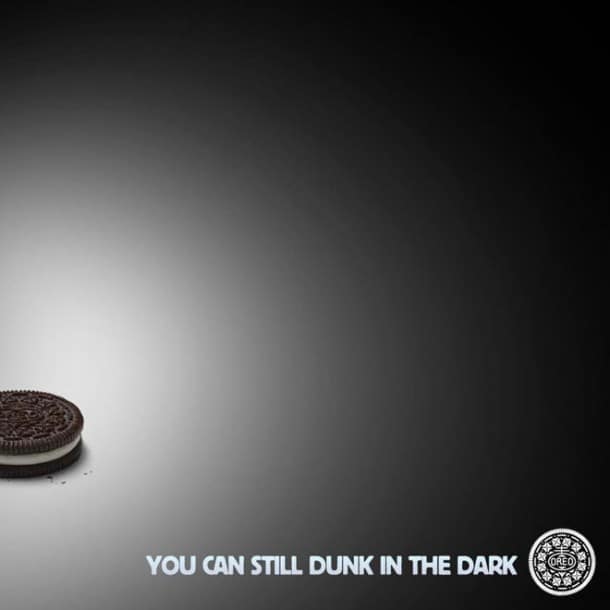
Oreo posted this image with the words “Power out? No problem.”
Oreo immediately received over 20,000 retweets on Twitter and 20,000 likes on Facebook.
Oreo’s quick-thinking to create relevant content on this trend was very impressive. This got people talking even more about Oreo, getting people to like and share, and increasing their engagement and awareness.
Creative/Unique
The content should stand out from other content/campaigns. It must be interesting enough to grab people’s attention.
Always “#LikeAGirl”
We so commonly hear phrases like “you run like a girl” that are supposed to be insults when in reality many girls are amazing runners.
Always was unique and creative in their campaign to change those views. Many people did not realize the affect “like a girl” phrases have on women. Many did not realize it was an insult until Always grabbed their attention. Attempting to change people’s views and open their eyes with this commercial was different at the time it was released. Always changed the way people view and talk about women.
The commercial received over 65 million views on YouTube and the hashtag is still popularly shared.
Emotional Appeal
The campaign should make the audience relate to the content to feel angry, sad, confident, etc. The emotional impact and how they relate to the content will get them to want to share.
Dove
Dove had a “Real Beauty Sketches” Campaign in 2013 to empower women. An FBI-trained sketch artist drew portraits of women based on how they see themselves and another portrait on how others see them. The women did not see themselves as “attractive,” while the strangers described them as they were, resulting in a more “attractive” portrait. The message is “You are more beautiful than you think.”
The campaign was viewed over 114 million times in one month and Dove received more YouTube subscribers and Twitter and Facebook followers.
The campaign went viral because of the emotional appeal. The audience made an emotional connection through joy and confidence. They related to the video enough to share with others and create a relationship with Dove.
Viral Marketing is Not Guaranteed
Viral marketing is not something that is guaranteed to result in viral success.
For Example, the Spotify campaign was used before in previous years and it did not go viral, but with a few updates and improvements they were able to get there.
The original campaign gave a personalized experience, but it was not easy to share. Not enough conversation could be created around it.
By making improvements and adding more characteristics, Spotify was able to go viral. Even then they still were not guaranteed to go viral and it could have taken years of adding and improving characteristics to get there. However, they got lucky in 2019 when they got a lot of users to share.
We can take certain steps to give our campaigns the best chance to go viral, but it is not guaranteed.
 Jill's Thoughts