Is Cyberactivism actually effective?

Is Cyberactivism actually effective?

This blog post is based on the Case Study: Breast Cancer Meme found in the textbook:

Strategic Social Media: From Marketing To Social Change, Malden, MA: Wiley Blackwell, Mahoney, L. M., & Tang, T. (2017), page 71

Cyberactivism uses social media mobilization to promote a cause/strategy by sharing it with one’s social media community. It targets emotions by making us feel like we’re doing the right thing when we share. We’re willing to hit a like button, but the problem is, we might not do more than that, such as actually participating in the charity. Social media practitioners need to focus on changing this behavior and increase participation.

Viral Qualities

Breast Cancer Awareness Month sparks a peak in sharing the cause on social media, this includes the use of memes, but what qualities make memes go viral and get shares?

  • Psychological Influence 
    • Sharing valuable content and supporting causes for self-fulfillment
  • Content follows the Content Matrix 
    • Content is entertaining, inspiring, educational, and convincing
  • Fun personalization
  • Creates buzz 
  • Sparks interest/confusion 
    • People want to learn more
  • Conformity 
    • Seeing friends participate makes you want to participate
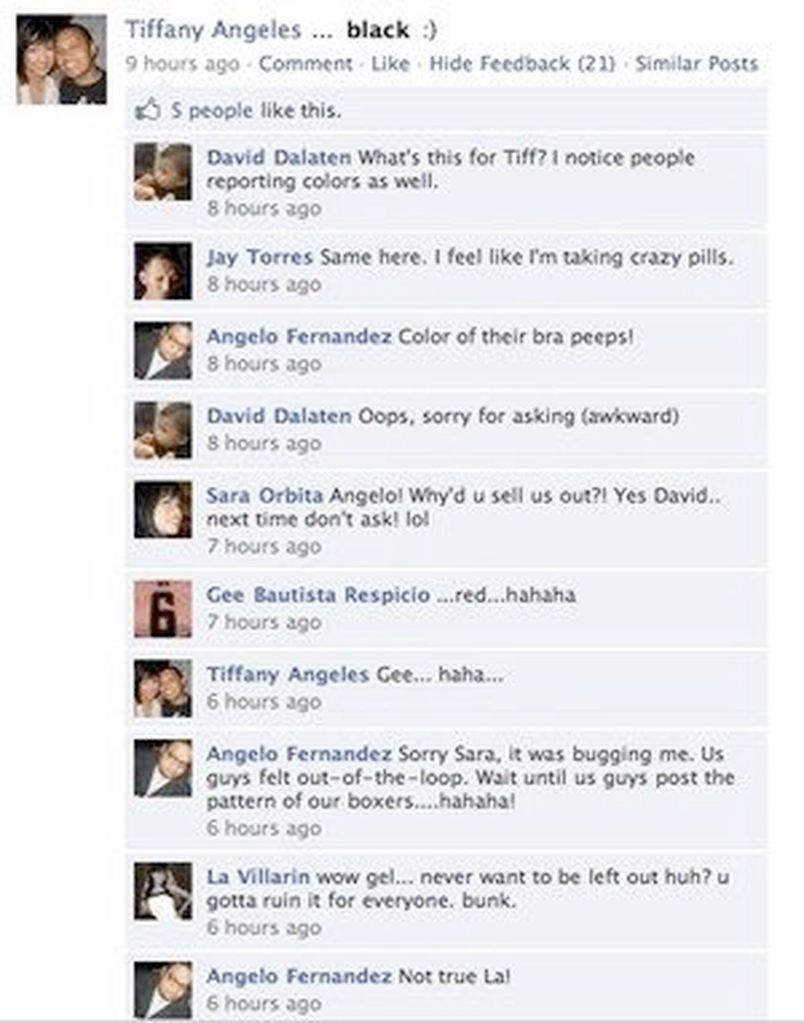
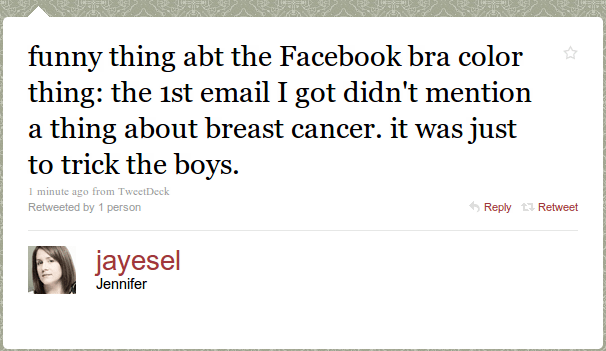
For example, the meme on the left started with females getting private messages asking them to share their name and bra color on Facebook. Men would see the meme and become confused, but it made sharing awareness fun and increased participation. Friends became interested as to why other women were sharing this meme, thus making them conform and take part.  However, this makes me wonder, did people want to learn more about why this was going viral or learn more about breast cancer and how they can participate in real-life? 
The campaign in this link has women share where they place their bag saying “I like it on…” and insert where they put their bags, for example “I like it on the floor.” Confused men are going to think in a sexual way. Sexualizing the awareness in this way made some upset while some just wished the messages and memes would provide more information about the cause and ways to donate.
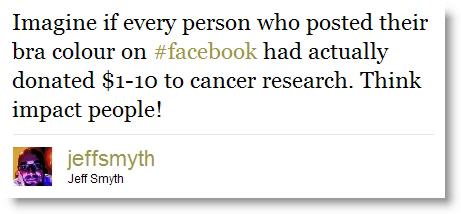
Is sharing a post and participating in awareness actually getting people to take real-life action to find a cure?

Although donations increased at the beginning of the month when the meme started, we don’t know if it’s because of the memes or simply because it’s the start of Breast Cancer Awareness Month.

The campaigns don’t encourage people to take real-life action, they only encourage participation on social media. Lack of awareness isn’t technically the issue, it’s getting people to take real-life action and better understand the cause. 

People are aware of breast cancer, but did you know men can have it too? Did you know 2000 men were diagnosed and 400 men died in America in 2012? 

The memes were only targeting women, leaving men confused. The confused men are probably the same ones who have no idea they can get it. They should be involved in the memes too; they should be allowed to spread awareness.

Changes to Consider

Ultimately, the social media meme fell short of user mobilization. While it was successful to get people to participate in sharing, it was unsuccessful at informing users. A social media campaign needs:

  • A Developed Plan
  • Defined Goals
  • Thorough Analysis

The campaigns goal was to spread awareness, not realizing that lack of awareness wasn’t the issue. Users were aware of breast cancer, but they weren’t aware of who’s effected, how to donate, or how to help.

According to Karen Young Levi, a spokesperson for breastcancer.org, the campaigns aren’t educating/including breast cancer issues, like screening and risk reduction. She believes that one can make an actual difference by including a link to learn more, get involved, and donate.

A major difference could have been made if each person who participated donated $1.

Here is a post that’s effectively spreading information and getting people to take action:

This post provides data, information, encourages viewers to check themselves, encourages users to tag friends/share, and includes a donation link.

Real-Life Mobilization

Real-life mobilization includes volunteering, donating, signing a petition, etc. Wouldn’t you rather volunteer at a chemotherapy treatment center than stating your name and bra color? Which do you think would be more beneficial? One can even share their volunteer experience on social media to continue to spread awareness, but make more of an impact by informing their community about what they learned and encouraging them to do the same.

How can you take part?

Most people understand breast cancer until they have it or know someone who does. Once that happens then they start to participate in real-life, but it would be so much more powerful if they could help before that happened. It shouldn’t have to take getting breast cancer to encourage you to learn more and take real-life action. Take action before it is too late. Help find a cure sooner rather than later so that person you know can get the help they need faster.
Warby Parker

Warby Parker

This Case Study can be found in the textbook:

Strategic Social Media: From Marketing To Social Change, Malden, MA: Wiley Blackwell, Mahoney, L. M., & Tang, T. (2017), page 18

An Innovative Way to Buy Glasses

Buying glasses can be difficult with high prices, booking appointments, and traveling to try-on glasses. Students at the University of Pennsylvania found a solution by launching Warby Parker to change the way glasses are sold.

Warby Parker sells directly to customers online to cut costs, but it’s a different way to buy than what customers were used to, making customers hesitate before trying Warby Parker. 

For me, I like to try my glasses on in the store, the thought of buying without trying them on scares me. I will use this purchase everyday, making it a high risk purchase. According to Bhasin in 10 Factors Influencing High Involvement Purchases, high-risk purchases are considered expensive products that need a lot of thought before buying. The product must satisfy all the consumers wants/needs before buying. Bhasin discusses, the consumer doesn’t want to risk spending a lot of money if the product doesn’t have what they’re looking for. To minimize the risk, Warby Parker took advantage of Social Media to engage with customers, answer their questions, and increase loyalty. 

Social Media Technology vs. Traditional Media Environment

Customers are used to the traditional buying processes and media environments. Many customers don’t like change/adjusting to new processes. The new process has to be easy and risk free.

Social Media Technology creates a simple way to find information, hear about products, ask questions, share with friends, and more! The consumer can comment or message any questions to speak directly with the brand. 

Not all customers may take the time to comment questions. Warby Parker uses Social Media to inform customers about glasses and answer questions before they’re asked. YouTube videos can discuss the challenges of buying glasses, finding the right pair, and what types of glasses Warby Parker provides. 

Blue Light Glasses

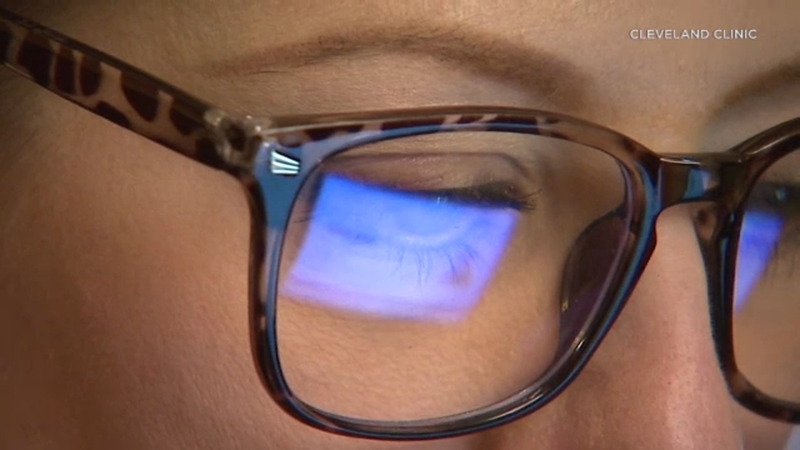
I use Blue Light to protect my eyes while using computers, phones, etc. My question would be, does Warby Parker sell Blue Light Glasses? Before I ask, there should be a post, article, video, about their Blue Light Glasses. This advantage of Social Media can show me exactly what I need without having to do the information search process myself.

Traditional Media increases exposure of a product/brand, but gives limited information and can’t answer your questions.

Media Communication

The Traditional Media Environment includes:

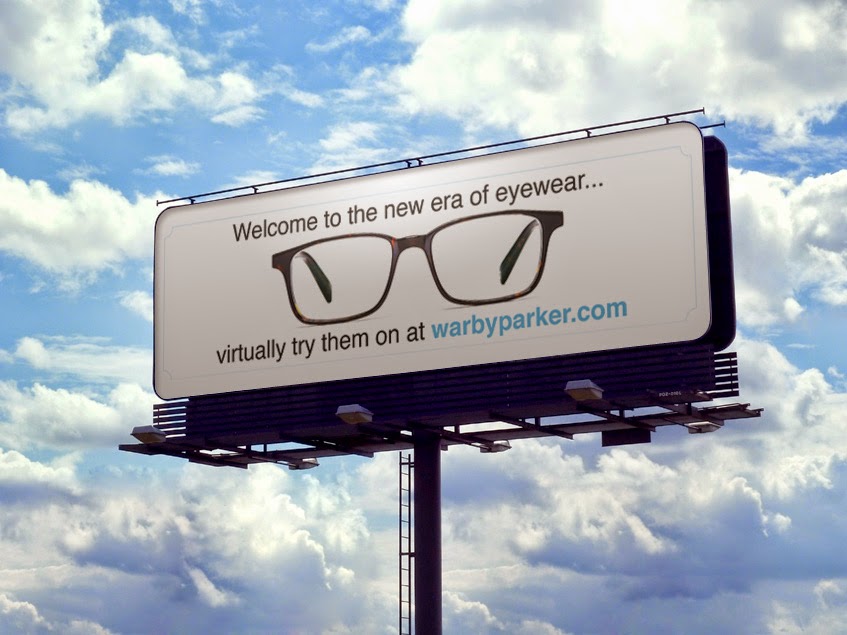
  • Billboards
  • Magazine Ads
  • TV/Radio Commercials

As consumers, we see traditional methods every day and one would have to remember the brand/product name to find additional information on their own. You can’t ask a billboard advertisement a question; you would look insane! However, if you’re scrolling through Instagram and see a sponsored ad for Warby Parker, you can go in the comments and ask any questions you have. You can also click on their profile to search for more information. The information is easy to find and you can actually talk to the advertisement/brand without looking insane. This communication creates a personalized experience that can’t be done through Traditional Media and minimizes any risk the consumer might have.

Reduce Risk

Warby Parker can share information on Social Media, answer questions in the comments, make a video of how their process works, etc to reduce risk. Consumers, like myself, have many questions that make us hesitate from purchasing glasses online. 

Will they look good on me? 

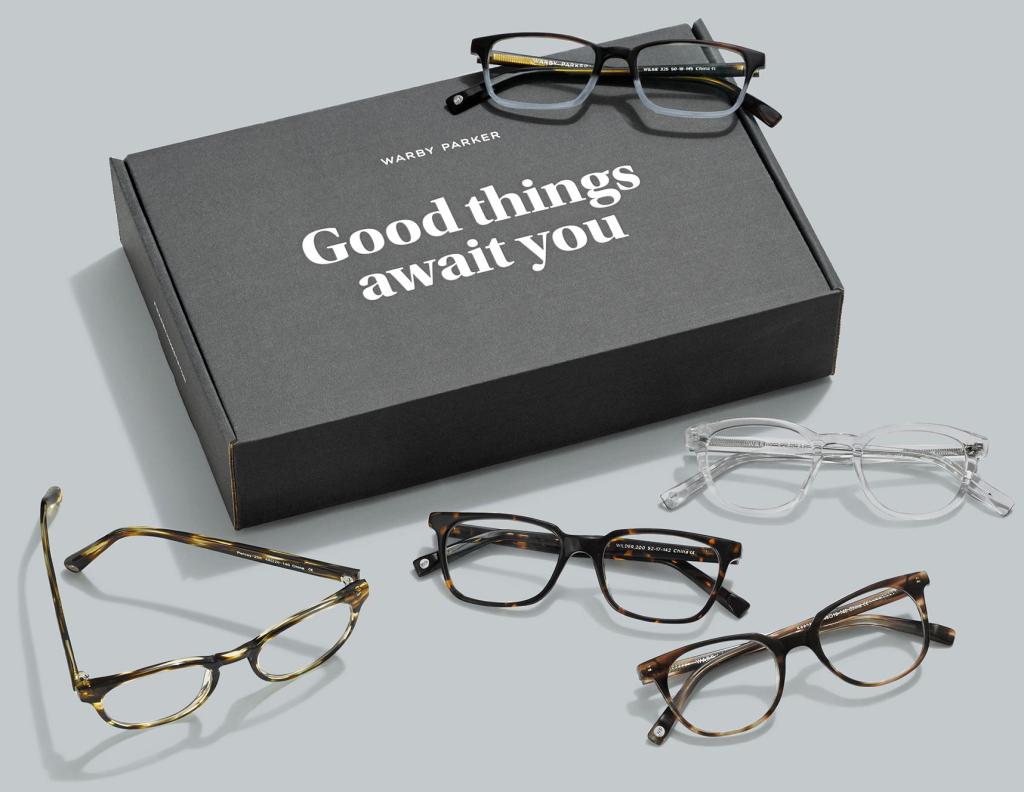
Many consumers fear the try-on process of online purchases. Warby Parker’s “Home Try-On Campaign” allows consumers to pick 5 glasses to be sent to them to try, pick the one they like best to buy, and send the rest back for free. 

Why should I buy online when I could buy in-person? 

Buying from Warby Parker online is cheaper in price, not quality, than buying from a store. By selling directly to the consumer and cutting out the middlemen that stores use, Warby Parker is able to cut costs.

Why have my glasses shipped when I can pick them up in-stores?

Warby Parker offers free-shipping!

User-Generated Content

Customers can share their glasses on Social Media and Warby Parker can share this content

The “Home Try-On Campaign” encourages customers to share their try-on experience through social media. If I were to take part, I would do a live video try on and a poll to have my followers vote on which I should buy.

By encouraging the consumer to share their glasses online, their friends will be less skeptical about buying from this brand knowing their friend had a great experience. 

If the brand told you that their glasses are amazing, you wouldn’t trust them as much as you would trust a friend’s opinion. Obviously the brand is going to say their glasses are great, which is why self-promotion isn’t always best. Getting consumers to promote for you is definitely the better option.

Warby Parker reaches a wider audience by customers sharing their own content. Plus, customers that take part on social media will have a better connection with the brand.